Peptide Research
Why Do Labs Request COAs?
-
By
 Team Peptora

Why do labs request COAs? Learn how certificates of analysis verify identity, purity, and batch consistency to protect research quality.
How to Store Lab Peptides Correctly
-
By
Team Peptora
Learn how to store lab peptides correctly with practical guidance on temperature, light, moisture, reconstitution, and batch handling.

What Is Peptide Batch Traceability?
-
By
Team Peptora
What is peptide batch traceability? Learn how lot records, COAs, HPLC, and chain-of-custody data help labs verify peptide identity and consistency.
Peptide Reconstitution Handling Guide
-
By
Team Peptora
A peptide reconstitution handling guide for research labs covering solvent choice, aseptic technique, storage, labeling, stability, and error control.

Best Peptide Quality Markers That Matter
-
By
Team Peptora
Learn which best peptide quality markers actually matter, from HPLC purity and MS identity to batch consistency, sterility, and sourcing transparency.

7 Top Laboratory Peptide Documentation Checks
-
By
Team Peptora
Use these top laboratory peptide documentation checks to verify purity, batch integrity, testing methods, and supplier compliance before research begins.

NAD + Research Review: What Holds Up?
-
By
Team Peptora
NAD plus research review for labs examining metabolism, mitochondrial function, aging biology, delivery limits, and sourcing quality.

Recovery Research Peptide Comparison
-
By
Team Peptora
Recovery research peptide comparison for labs evaluating BPC-157, TB-500, GHK-Cu, and NAD+ by mechanism, sourcing quality, and study fit.

Peptide COA Interpretation Guide
-
By
Team Peptora
Use this peptide coa interpretation guide to read purity, HPLC, MS, batch data, and contaminant screening with more confidence.
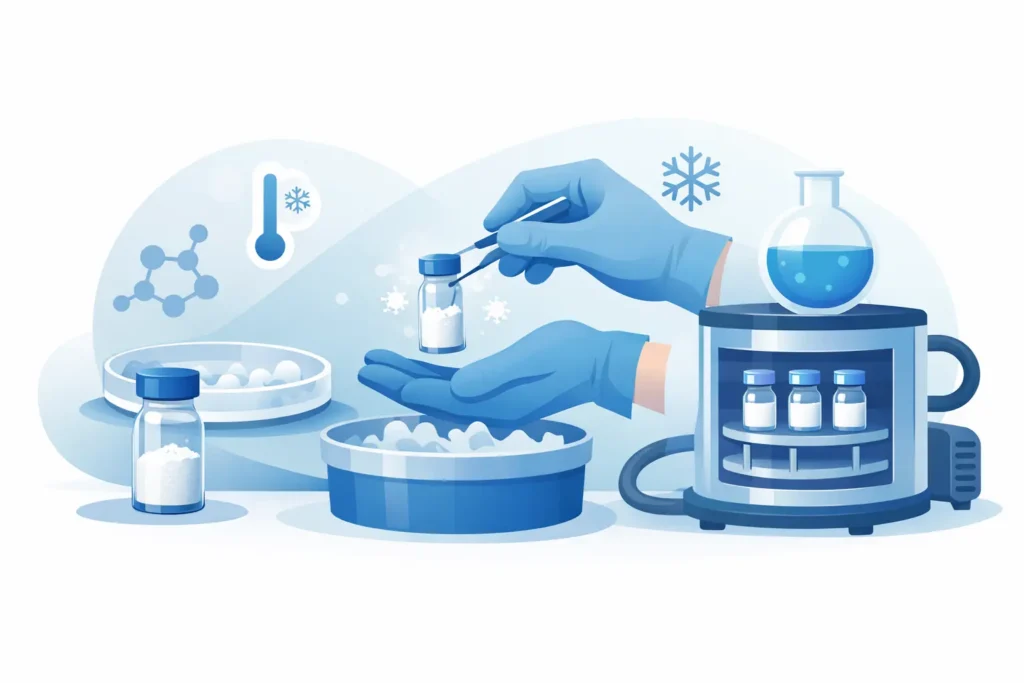
Freeze Dried Peptide Handling Basics
-
By
Team Peptora
Freeze dried peptide handling affects purity, stability, and repeatability. Learn storage, reconstitution, and lab practices that reduce avoidable loss.