USA Research Peptides: What Quality Evidence Proves
A peptide vial can look identical to another vial while producing very different research conditions. For laboratories and qualified buyers sourcing USA research peptides, the meaningful distinction is not a polished label or a broad purity statement. It is whether the material is supported by traceable, batch-specific analytical evidence that allows the researcher to assess what is actually being introduced into a controlled in-vitro workflow.
That standard changes procurement decisions. Researchers working with peptide characterization, stability assessment, cellular systems, or metabolic pathway models need materials selected on documentation, identity confirmation, and consistent handling – not assumptions. When inputs are poorly characterized, downstream observations become harder to interpret, compare, and reproduce.
Why USA Research Peptides Require More Than a Purity Number
A stated purity percentage is useful, but it does not answer every question a research buyer should ask. Purity describes the relative amount of a target component under a defined analytical method. It does not independently establish that the target component is the intended peptide, confirm its molecular mass, or show whether a specific batch has been screened for endotoxin.
This is where analytical context matters. A 99% or higher UHPLC result can be a strong quality indicator when it is paired with a clearly identified batch, an accessible Certificate of Analysis, and appropriate identity verification. Without that supporting record, a percentage alone gives the buyer limited visibility into how the conclusion was reached.
For serious procurement, the practical question is straightforward: Can the supplier show objective evidence for the exact material being considered? A credible answer should be grounded in lot-level documentation rather than generalized marketing language.
The Evidence Stack Behind Research-Grade Procurement
Research-use-only peptide procurement is strongest when several analytical controls work together. Each addresses a different source of uncertainty, and none should be treated as a substitute for the others.
UHPLC purity screening
Ultra-high-performance liquid chromatography, or UHPLC, separates components within a sample so the target peak and related impurities can be evaluated. It is commonly used to support qualitative and quantitative purity assessment. For a research buyer, the value is not simply seeing a high percentage. It is knowing the reported figure is tied to a defined analytical process and a specific batch.
A reported purity threshold of 99% or higher may suit many controlled in-vitro applications, but suitability still depends on the research objective. A method-development exercise, comparative characterization study, and highly sensitive cell-based workflow may each impose different acceptance criteria. Procurement should follow the protocol, not a one-size-fits-all claim.
Mass spectrometry identity confirmation
UHPLC can indicate compositional separation, but mass spectrometry contributes a separate layer of confirmation by evaluating molecular mass. This matters because a clean chromatographic profile does not, by itself, establish that the intended molecular identity is present.
Identity confirmation helps researchers distinguish a documented research material from an ambiguous listing. For peptide compounds, where sequence, modification state, and molecular weight are central to experimental design, this verification supports a more defensible chain of evidence before work begins.
Endotoxin screening
Endotoxin screening is particularly relevant for research environments where trace contaminants may affect experimental conditions. It should not be confused with a clinical safety claim or used to imply suitability for human or veterinary use. It is a quality-control data point that can help laboratories evaluate material characteristics for their own non-clinical, in-vitro procedures.
The appropriate interpretation remains protocol-specific. Endotoxin data should be considered alongside the laboratory’s internal controls, intended assay conditions, contamination-prevention practices, and documentation requirements.
Batch-level Certificates of Analysis
A Certificate of Analysis, or COA, brings key information into one reviewable record. Depending on the supplier and test program, it may include the compound name, lot or batch number, test methods, reported purity, molecular identity findings, and other quality-control observations.
The most useful COA is accessible before or alongside procurement and can be connected directly to the material received. Account-based COA access and clear order tracking reduce friction for teams that need to document incoming research materials. The certificate is not a substitute for internal qualification, but it gives researchers the evidence needed to begin that process with greater confidence.
What Traceability Looks Like in Practice
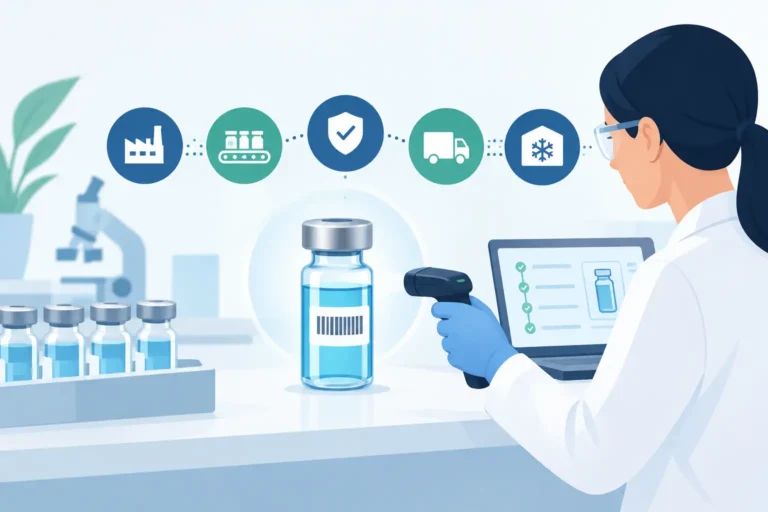
Traceability is often described broadly, but its operational value is concrete. A traceable procurement process allows a laboratory to connect its purchase record, product identifier, batch number, COA, storage record, and experimental documentation. If a result later requires review, the team can identify the exact research material involved rather than relying on memory or generic product descriptions.
This is especially useful when studies run across multiple dates, personnel, or locations. A documented lot number creates a reference point for comparisons between experiments. If materials change batches, researchers can account for that variable instead of discovering it after unexplained variation appears in the dataset.
Domestic fulfillment can also support more predictable planning for U.S.-based research operations. Shipping speed does not replace proper storage controls, but expedited domestic delivery may reduce procurement lead time and help teams coordinate receiving procedures. Buyers should still confirm packaging expectations, storage requirements, and internal receiving protocols before ordering.
How to Evaluate a USA Research Peptide Supplier
The right supplier is not necessarily the one making the largest number of claims. It is the one making claims that can be examined. Before placing an order, qualified buyers should review whether the company clearly defines its materials as research-use-only and whether it provides specific, objective quality evidence.
Start by looking for independently conducted U.S. laboratory testing or a transparent explanation of the testing process. Then determine whether UHPLC purity screening and mass-spectrometry identity verification are documented at the batch level. Endotoxin screening may be relevant depending on the research setting, so its availability and reporting should be evaluated against the study protocol.
Product presentation matters as well. Clearly specified unit sizes help procurement teams plan concentrations, inventory, and budget without inference. A supplier that provides account access to COAs, straightforward order tracking, secure checkout, and defined domestic shipping options can reduce administrative friction without compromising the review process.
Irontide Labs positions its catalog around this evidence-first model, with independently tested, research-use-only compounds supported by batch-oriented quality documentation. The purpose is not to present research materials as supplements, pharmaceuticals, diagnostic products, or therapies. It is to give qualified researchers a clearer basis for selecting materials for controlled in-vitro investigation.
Keep Compliance Boundaries Clear
Research peptides must be evaluated and handled within their stated use limitations. Materials designated for research use only are not intended for human consumption, veterinary administration, clinical use, diagnostic use, therapeutic use, or pharmaceutical application. Those boundaries are not fine print. They define the responsible procurement and use framework.
Clear compliance language also protects research integrity. When a supplier explicitly limits a compound to non-clinical laboratory investigation, researchers can assess it according to appropriate analytical and experimental standards rather than conflating it with regulated medical products. Responsible sourcing means matching the material, documentation, handling, and intended use to the actual research setting.
Build Better Inputs Before You Build the Experiment
The quality of an experiment cannot exceed the confidence researchers have in its inputs. Selecting USA research peptides with accessible COAs, UHPLC purity data, mass-spectrometry identity confirmation, endotoxin screening where relevant, and batch-level traceability gives teams a firmer starting point for controlled work.
Before the next purchase order is approved, review the evidence attached to the specific batch, confirm that the material fits the protocol’s non-clinical requirements, and document it from receiving through study completion. Better research begins with materials that can withstand scrutiny.