UHPLC HPLC Comparison for Peptide Quality
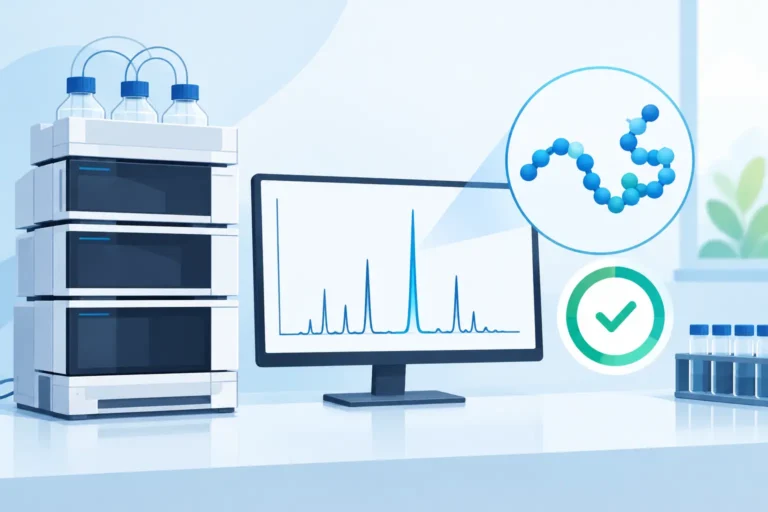
A chromatogram can look clean and still leave critical questions unanswered. For researchers evaluating peptide materials, a useful UHPLC HPLC comparison is not about declaring one platform universally superior. It is about understanding what each method can resolve, what its purity result represents, and where complementary identity and contaminant testing are required.
A reported purity percentage carries weight only when the analytical method, detection conditions, sample preparation, and batch documentation support the claim. UHPLC and HPLC are both established separation techniques, but their operating ranges and practical strengths differ in ways that matter for peptide characterization, procurement review, and controlled in-vitro research. For qualified research teams seeking batch-verified reference standards with complete analytical documentation, you can browse Irontide’s research compounds directly in our catalog.
UHPLC HPLC Comparison: The Core Difference
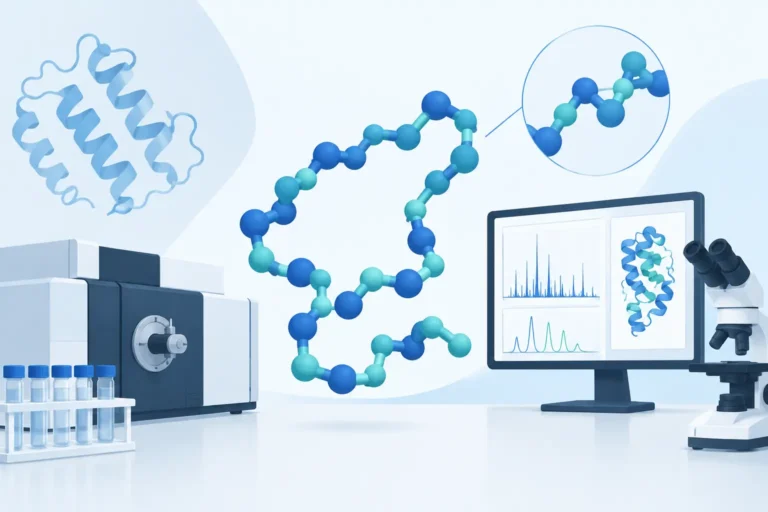
High-performance liquid chromatography, or HPLC, separates compounds as they move through a packed column under pressure. A mobile phase carries the sample through stationary-phase particles, and analytes elute at different times according to their chemical interactions with that column and solvent system. Detectors, commonly UV-based for peptide purity screening, convert the eluting components into a chromatogram.
Ultra-high-performance liquid chromatography, or UHPLC, follows the same analytical principle while operating with smaller stationary-phase particles and substantially higher system pressure capability. Conventional HPLC columns commonly use particles around 3 to 5 micrometers. UHPLC methods often use particles below 2 micrometers. Smaller particles can improve chromatographic efficiency, but they also create greater backpressure.
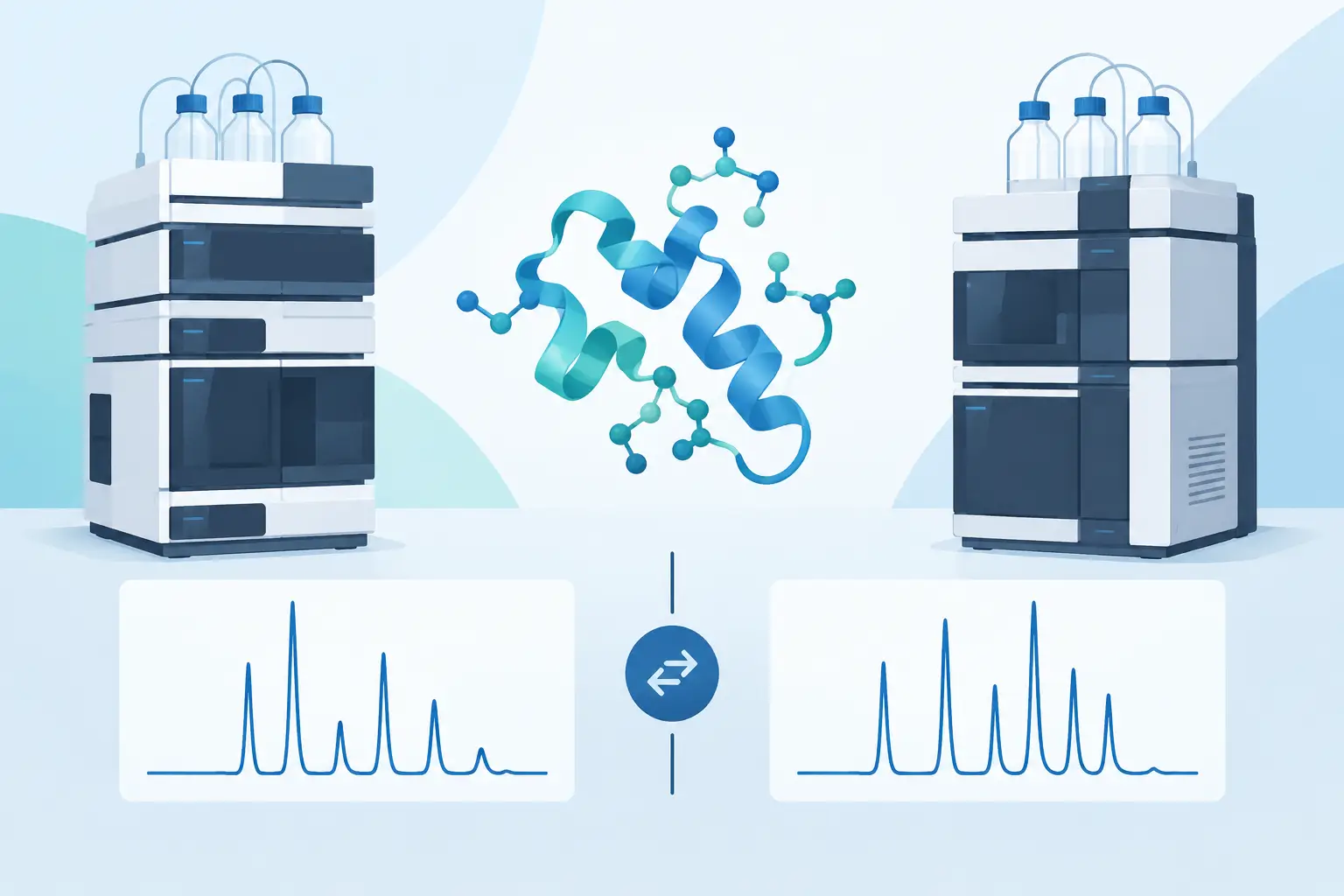
That physical difference has practical consequences. UHPLC systems are engineered to handle higher pressures, often enabling narrower peaks, faster separations, and improved resolution of closely eluting components. HPLC remains highly capable and is still appropriate for many validated assays, especially where run time, instrument availability, method history, and sample throughput favor an established conventional method.
The right question is not whether UHPLC replaces HPLC in every laboratory. The right question is whether the separation method is fit for the analyte and the decision being made from the data.
Why Resolution Matters in Peptide Purity Review
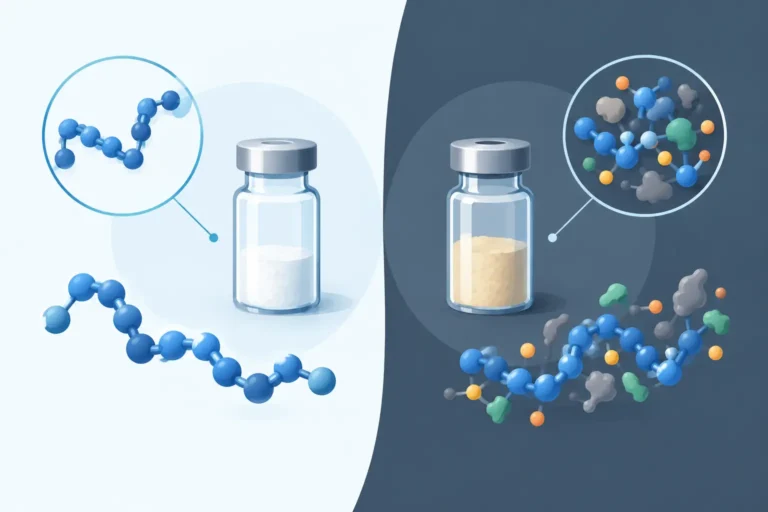
Peptide preparations can contain process-related or degradation-related species that are structurally similar to the primary target. Truncated sequences, deletion impurities, oxidation products, deamidated forms, aggregation-related signals, residual protecting-group species, and closely related synthesis byproducts may not separate cleanly under every method.
Resolution describes how clearly two adjacent chromatographic peaks are separated. When peaks overlap, assigning area to the main analyte becomes less certain. A fast chromatogram is not necessarily a better chromatogram if speed comes at the expense of detecting a nearby impurity. Conversely, a longer HPLC method is not automatically more rigorous if it does not provide meaningful separation for the relevant impurity profile.
UHPLC can offer a meaningful advantage when method conditions allow it to distinguish peaks that would otherwise partially co-elute. Its narrower peak widths may also improve sensitivity for low-level components. This is particularly relevant when reviewing high-purity peptide materials, where the remaining fraction may consist of trace species that require capable separation to observe and quantify.
Still, column chemistry and method development matter as much as instrument class. A poorly selected UHPLC gradient or stationary phase can underperform a well-developed HPLC method. Researchers should look beyond the label on the instrument and consider retention behavior, peak shape, gradient design, wavelength selection, integration approach, and system suitability criteria.
Pressure, Particle Size, and Method Limits
The higher pressure tolerance of UHPLC is not a cosmetic specification. It is what permits efficient flow through columns packed with smaller particles. This can produce more theoretical plates within a shorter column length, contributing to sharper separations.
However, high-pressure operation demands compatible pumps, fittings, tubing, columns, and sample-handling practices. Method transfer from HPLC to UHPLC is therefore not always a simple matter of reducing column dimensions and increasing flow. Dwell volume, extra-column dispersion, injection volume, gradient delay, solvent compressibility, and detector acquisition rate can all alter chromatographic performance.
For a laboratory working from an established HPLC method, conversion to UHPLC should be treated as method redevelopment or qualification work, not assumed equivalence. Retention times may shift. Selectivity can change. A result that appears comparable by total run time may not be comparable by resolution or calculated purity.
Speed Is Valuable, but It Is Not the Primary Claim
UHPLC is often associated with shorter analysis times. That advantage is real when laboratories need to increase throughput, screen multiple conditions, or evaluate a large number of samples without sacrificing separation quality. Faster runs can reduce solvent consumption per injection and help analytical teams make quicker decisions.
But speed should remain secondary to data fitness. If a method is used to support a reported purity value, the goal is credible separation and defensible integration, not simply the shortest possible cycle time. A short method that leaves an impurity hidden beneath the main peak can overstate apparent purity. A longer method may be justified when it provides the separation necessary to characterize the sample appropriately.
This is why chromatographic results should be read in context. A single number, such as 99% purity, is more informative when paired with the test method, detector type, chromatogram, batch identifier, and related quality evidence. It should not be interpreted as a complete description of composition, identity, biological activity, sterility, or suitability for any use outside documented research parameters.
What UHPLC Purity Screening Can and Cannot Establish
For peptide research materials, reverse-phase UHPLC with UV detection is frequently used to estimate chromatographic purity by measuring the relative area of the primary peak against detected peaks under defined conditions. It is a valuable quantitative screening tool. It can show whether the main component dominates the UV chromatogram and whether detectable related components are present within the method’s capabilities.
Its limits are equally important. UV area percentage is generally a relative measurement. Different compounds can have different UV responses at a given wavelength, meaning area normalization is not always identical to absolute mass fraction. Components that do not absorb strongly at the selected wavelength may be underrepresented or absent from the displayed purity profile.
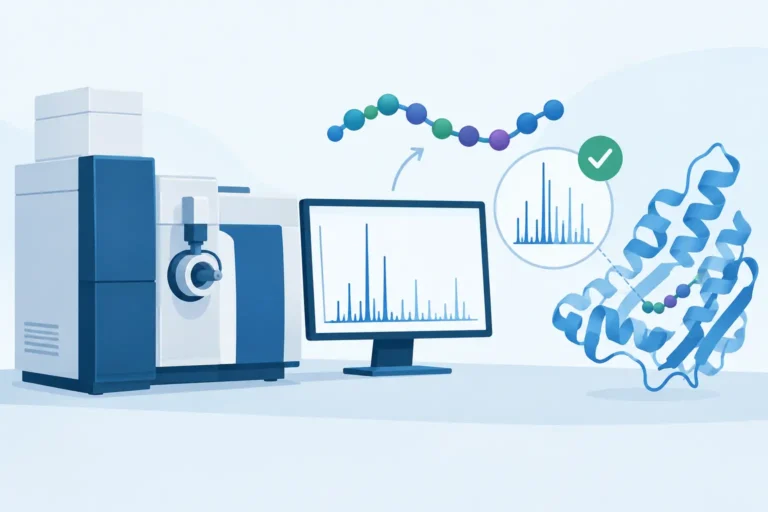
UHPLC also does not independently confirm molecular identity. A peak eluting at an expected retention time is not, by itself, proof that the peak is the intended peptide. Mass spectrometry addresses a different question by evaluating molecular mass and supporting identity confirmation. Used together, UHPLC and mass spectrometry provide a more meaningful quality picture than either technique viewed in isolation.
Neither approach should be confused with endotoxin screening, bioburden testing, sterility testing, residual-solvent analysis, elemental impurity analysis, or functional bioassay. Each test has a specific purpose. Responsible batch review means matching the claim to the method rather than treating a chromatography result as a universal certificate of quality.
How to Read a COA with a Researcher’s Eye
A Certificate of Analysis should enable traceability, not simply display a favorable purity number. Start by confirming that the certificate corresponds to the specific lot under consideration. Lot or batch identification, test date, material name, and reported result should be internally consistent.
Next, identify the analytical techniques used. A strong peptide quality package distinguishes chromatographic purity screening from molecular identity confirmation. If UHPLC is listed, consider whether the reported result is described as area percentage, whether a chromatogram is available, and whether the method conditions provide enough context to interpret the data responsibly.
Researchers should also examine whether the documentation includes defined acceptance criteria and whether additional tests reflect the intended research workflow. For controlled in-vitro investigation, endotoxin screening may be relevant to experimental design even though it is analytically separate from UHPLC purity. The same applies to concentration analysis when accurate reconstitution or assay preparation depends on verified content.
At Irontide Labs, batch-level documentation is positioned around independent U.S. testing, UHPLC purity screening, mass-spectrometry identity verification, and endotoxin screening. That combination reflects a practical quality principle: no single test should be asked to prove more than it can establish.
Choosing Between UHPLC and HPLC for Laboratory Work
For routine applications supported by a well-qualified conventional method, HPLC may be the most efficient and appropriate choice. It remains widely available, flexible, and capable of producing high-quality separations. Laboratories with established methods, validated procedures, and moderate throughput may gain little by changing platforms without a clear analytical need.
UHPLC is often better suited when higher throughput, sharper peak profiles, reduced run times, or improved resolution of closely related species are needed. It can be particularly useful during method development, impurity profiling, and comparative batch analysis, provided the full system is optimized for high-pressure, low-dispersion performance.
The decision should account for more than peak appearance. Consider method purpose, sample matrix, anticipated impurities, required sensitivity, acceptable cycle time, instrument compatibility, and the cost of requalifying a transferred method. For procurement professionals, the parallel question is simpler: does the supplier provide data that clearly states what was tested, how it was tested, and which lot the result represents?
Build Decisions on Complementary Evidence
A defensible peptide quality review does not rest on an isolated chromatographic peak or a marketing-level purity claim. UHPLC can deliver fast, high-resolution purity screening. HPLC can provide dependable separation where established methods remain fit for purpose. Mass spectrometry supports identity confirmation, while endotoxin testing answers a separate and consequential question for many research workflows.
The most useful data package is the one that makes those boundaries visible. When analytical methods are documented, batch-specific, and interpreted according to their actual capabilities, researchers can make procurement decisions with greater confidence and protect the integrity of the work that follows.