What Does MOTS-c Do? The 3 Ultimate Guides to Essential Mechanisms.
As research into cellular energy metabolism advances, mitochondrial-derived peptides (MDPs) have emerged as primary targets for in-vitro study. Among these, MOTS-c has gained significant attention for its unique origin and role in intracellular signaling.
What exactly is the MOTS-c peptide?
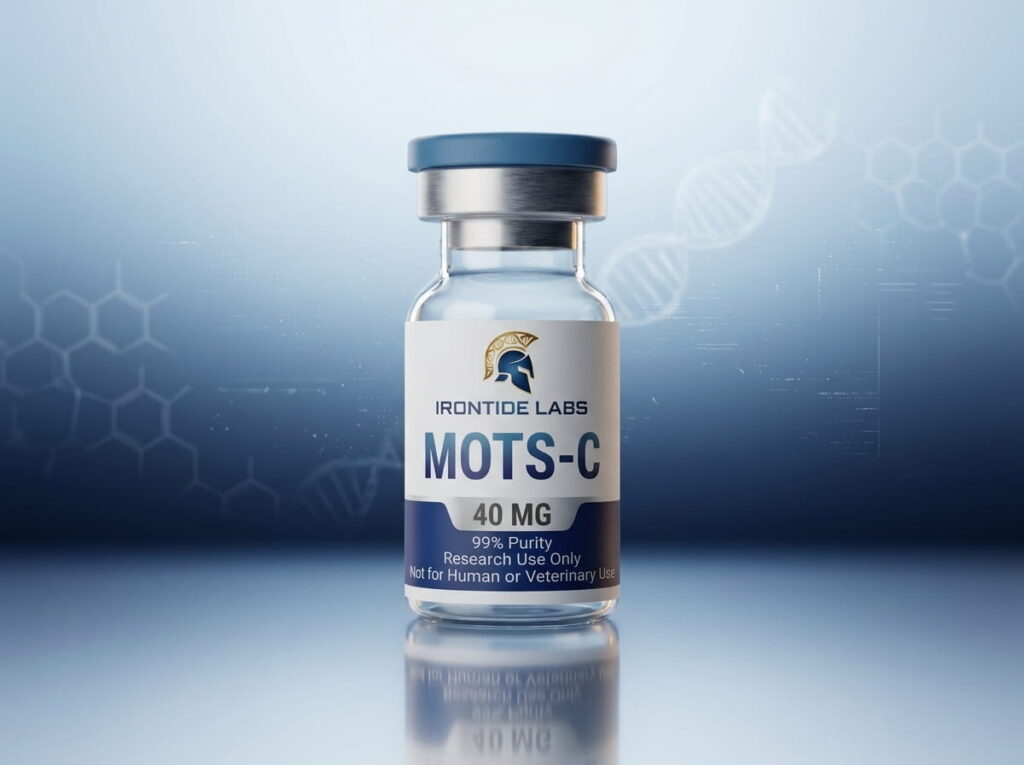
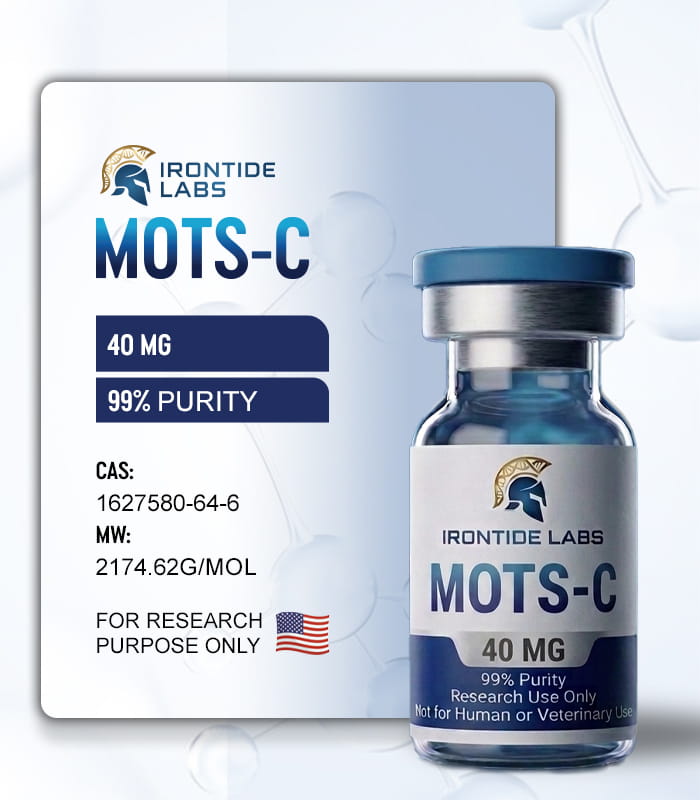
MOTS-c (Mitochondrial Open Reading Frame of the 12S rRNA Type-C) (CAS 1627580-64-6) is a 16-amino acid peptide encoded directly within the mitochondrial genome. Unlike the vast majority of peptides and proteins that are encoded in the cell’s nucleus, MOTS-c functions as a retrograde signaling molecule, transmitting metabolic data from the mitochondria back to the nucleus to regulate gene expression during cellular stress.
What does MOTS-c do in metabolic in-vitro models?
In controlled laboratory environments, MOTS-c acts as a primary regulator of metabolic homeostasis and cellular energy production. When introduced to cellular assays—particularly myocytes (muscle cells)—MOTS-c mimics metabolic stress responses, prompting the cell to optimize energy utilization, increase glucose uptake, and enhance lipid oxidation.
Researchers observe three primary mechanisms of action when studying MOTS-c in-vitro:
- AMPK Activation: MOTS-c up-regulates AMP-activated protein kinase (AMPK), a critical cellular energy sensor. Activating this pathway stimulates fatty acid oxidation and enhances glucose transport into the cell.
- Folate Cycle Regulation: The sequence uniquely interacts with the methionine-folate cycle, increasing the accumulation of AICAR (an AMP analog), which further drives continuous AMPK activation.
- Nuclear Translocation: Under metabolic stress, MOTS-c physically translocates from the mitochondria to the nucleus, where it binds to DNA to directly influence the transcription of genes associated with antioxidant responses and energy metabolism.
How is MOTS-c utilized in laboratory research?
Investigators utilize lyophilized [Link: MOTS-c] to construct controlled assays exploring metabolic dysfunction, mitochondrial signaling, and cellular aging. Because of its targeted interaction with the AMPK pathway, it is frequently used as a baseline reference material in studies evaluating cellular resistance to metabolic stress and glucose deprivation.
For accurate in-vitro modeling, researchers must ensure they are utilizing high-purity (≥99%) starting materials, as trace reagents can disrupt delicate mitochondrial signaling. Every MOTS-c batch should be verified against an independent Certificate of Analysis (COA) prior to reconstitution and introduction to the assay environment.
Compliance and Research Boundaries
Irontide Labs provides MOTS-c exclusively for in-vitro laboratory research and analytical modeling. All materials in the Irontide catalog are sold for Research Use Only (RUO). They are explicitly not compounded, packaged, or intended for human, veterinary, diagnostic, or therapeutic use.