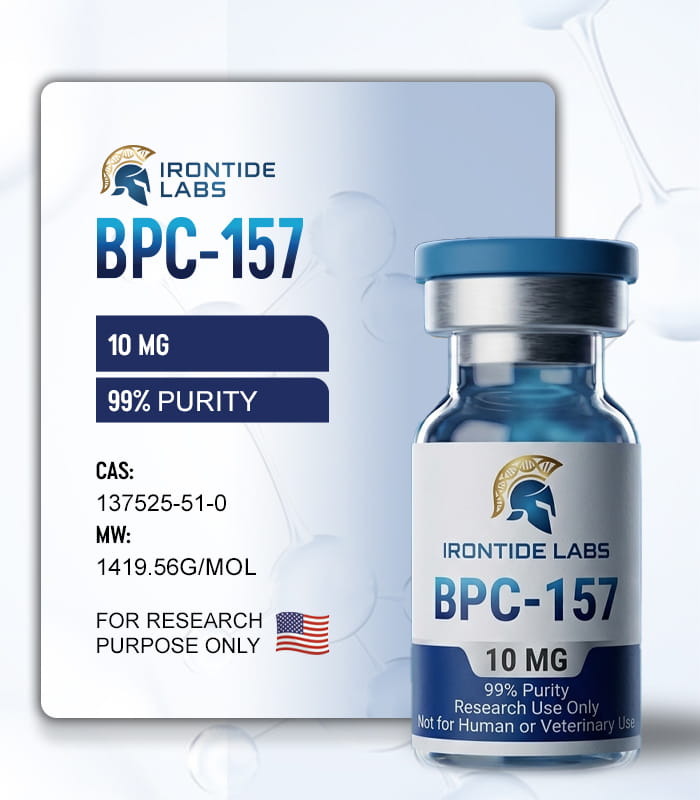
BPC-157 reconstitution: Essential Protocols (CAS 137525-51-0).
A BPC-157 reconstitution protocol is only as reliable as the record surrounding its preparation. As a 15-amino acid sequence derived from human gastric juice proteins, this compound has become a focal point in advanced cellular research. For controlled in-vitro work, handling protocols must protect traceability from the moment a lyophilized batch enters the laboratory through final use, storage, and disposal.
A repeatable process is not simply a matter of adding a solvent. It is a documented control point that affects concentration accuracy, sample integrity, and the defensibility of downstream results.
In-Vitro Mechanisms of Action When designing experimental models, researchers must understand the compound’s established biological pathways. In-vitro studies investigating BPC-157 (CAS 137525-51-0) frequently examine its mechanisms in cellular migration, angiogenesis, and fibroblast proliferation under controlled laboratory conditions. By targeting these specific pathways, investigators aim to understand how the sequence interacts with nitric oxide systems and growth factor up-regulation.
Reviewing Published Literature Current scientific literature and published trials continue to evaluate the compound’s potential in localized tissue remodeling and gastrointestinal stability models. While these published models provide a framework for cellular behavior, laboratory execution requires strict adherence to handling variables to replicate these complex physiological mechanisms accurately.
Reconstitution Protocols and Solvent Selection There is no universal solvent or single concentration appropriate for every research workflow. However, standard protocols dictate the following baseline preparation steps:
- Verify the Batch: Before any preparation begins, match the vial label and lot identifier to the applicable Certificate of Analysis. The COA establishes the analytical context for the starting material, including identity confirmation and UHPLC purity data.
- Equilibration: Allow the lyophilized vial to reach room temperature before opening to prevent condensation from introducing unmeasured moisture into the peptide cake.
- Solvent Addition: Calculate the required reconstitution volume based on the laboratory’s planned stock concentration. When injecting the diluent (commonly sterile bacteriostatic water or sterile saline, depending on the assay), direct the flow against the glass wall of the vial rather than directly onto the lyophilized powder.
- Dissolution: Do not shake or aggressively agitate the vial. Swirl gently or allow the solvent to naturally dissolve the cake to prevent shearing the delicate peptide bonds.
Lyophilized Stability and Storage Controls A reconstitution record is incomplete without strict storage controls. Do not assume that storage expectations for the lyophilized material automatically apply to the reconstituted solution.
- Pre-Reconstitution: Lyophilized BPC-157 is generally stable at room temperature for short durations (such as transit), but for long-term preservation, it should be stored at -20°C away from light and moisture.
- Post-Reconstitution: Once the solvent is introduced, the compound’s degradation clock begins. Reconstituted solutions must be refrigerated at 2°C to 8°C. To maintain structural integrity and prevent bacterial proliferation, researchers should establish a strict hold-time SOP (standard operating procedure) and discard any unused solution that exceeds the validated timeframe or shows signs of particulate formation.
Purity as a Laboratory Safety Standard High-purity starting material supports stronger research controls, but it also dictates the safety and viability of the experimental environment. For sensitive workflows, even trace amounts of heavy metals, leftover cleavage reagents, or bacterial endotoxins can trigger unintended cellular responses, effectively ruining an assay.
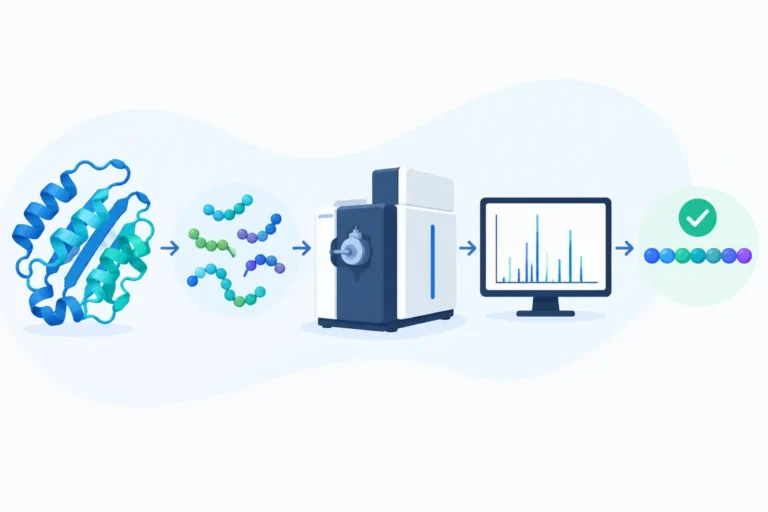
Independent U.S. testing, UHPLC purity screening at ≥99%, mass-spectrometry identity verification, and strict endotoxin controls provide the foundational evidence required for rigorous study design. These metrics must be verified on a batch-by-batch basis.
Compliance and Research Boundaries Irontide Labs positions BPC-157 and all catalog materials for research use only. They are explicitly not offered or packaged for human, veterinary, clinical, diagnostic, therapeutic, or pharmaceutical use. Protocols must remain within controlled, non-clinical in-vitro research boundaries. The most useful protocol is one another qualified researcher can reproduce from the record alone: a verified starting batch, defined solvent system, documented concentration, and an unbroken storage history.